

The cryptocurrency market continues evolving at a remarkable pace, with institutional adoption, regulatory clarity, and technological innovations reshaping the landscape in 2025. Investors seeking high-potential digital assets need to understand the fundamental factors driving crypto success rather than chasing speculative gains. This comprehensive guide examines five cryptocurrencies demonstrating strong adoption trends, innovative technology, and market fundamentals that could position them for significant growth.
📊 CRYPTO MARKET OVERVIEW
• Global crypto market cap exceeded $3.5 trillion in early 2025
• Bitcoin held approximately 55% dominance over the total market
• Institutional crypto investment products saw record inflows exceeding $20 billion in 2024
• Over 300 million people worldwide own cryptocurrency as of late 2024
Key Takeaways
• Adoption metrics matter more than hype when evaluating crypto potential
• Technological utility separates sustainable projects from speculative tokens
• Regulatory clarity in major markets creates growth opportunities
• Diversification remains essential given crypto volatility
• Due diligence is critical before any investment decision
The cryptocurrency market in 2025 presents a maturing ecosystem where utility-driven projects increasingly outperform purely speculative assets. Understanding which factors contribute to long-term success helps investors identify opportunities while managing inherent risks.
Understanding Cryptocurrency Potential
Before examining specific cryptocurrencies, investors should understand the fundamental drivers that historically correlate with market success. Cryptocurrency value ultimately derives from network effects, real-world utility, scarcity mechanisms, and community trust.
What Drives Crypto Value
Cryptocurrency valuations depend on several interconnected factors that experienced investors analyze before making allocation decisions. Network effect creates exponential value as more users adopt a particular cryptocurrency, making established networks increasingly difficult to displace. Utility determines whether a cryptocurrency solves real problems beyond simple value storage, with functional use cases supporting sustainable demand.
Scarcity mechanisms built into cryptocurrency protocols, such as Bitcoin’s capped supply of 21 million coins, create deflationary pressure that historically supports long-term value. Community consensus and developer activity indicate project health and continued innovation capacity, while regulatory acceptance enables institutional participation and broader market access.
Evaluating Risk Factors
The cryptocurrency market remains highly volatile, with prices capable of significant swings within short timeframes. Investors should consider market liquidity, which affects the ease of buying or selling positions without substantial price impact. Regulatory risk remains substantial, as government policies can dramatically impact specific projects or entire market segments. Technical risk involves potential vulnerabilities in blockchain protocols or smart contracts that could compromise security or functionality.
⚠️ IMPORTANT DISCLAIMER: Cryptocurrency investments carry substantial risk, including potential total loss of capital. This article provides educational information only and does not constitute financial advice. Investors should consult qualified financial professionals before making investment decisions. Past performance does not guarantee future results.
Bitcoin (BTC): The Market Leader
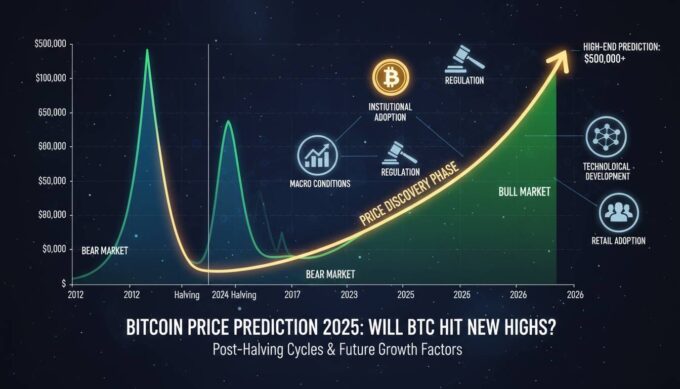
Bitcoin remains the dominant cryptocurrency by market capitalization and continues benefiting from institutional adoption, store-of-value narratives, and increasing recognition as digital gold.
Why Bitcoin Shows Strong Potential
Bitcoin’s position as the first and most widely recognized cryptocurrency provides unmatched brand security and network effects. Institutional adoption accelerated dramatically in 2024, with major financial institutions launching Bitcoin investment products and treasury allocations. The Bitcoin network’s hashrate reached new highs in early 2025, demonstrating unprecedented mining security and network resilience.
Key Metrics:
• Market capitalization: Approximately $1.5+ trillion
• Daily trading volume: Consistently exceeded $50 billion
• Institutional holdings: Growing through ETFs and corporate treasuries
• Network hashrate: Historical highs indicating robust security
Bitcoin’s fixed supply cap creates inherent scarcity that distinguishes it from inflationary fiat currencies. The upcoming halving events continue reducing new coin issuance, historically correlating with bullish price movements. Lightning Network development enables faster, cheaper transactions, expanding practical utility beyond store-of-value narratives.
Considerations for Bitcoin Investors
While Bitcoin demonstrates strong fundamentals, investors should note that its established market cap limits percentage gains compared to smaller cryptocurrencies. Regulatory developments remain influential, with potential policy changes in major markets capable of creating volatility. Competition from layer-2 solutions and alternative blockchains addresses some historical limitations while maintaining Bitcoin’s core value proposition.
💡 FACT: Bitcoin has outperformed gold on a risk-adjusted basis over the past decade, with higher volatility but substantially greater total returns (Source: Multiple financial analyses, 2024)
Ethereum (ETH): The Smart Contract Platform
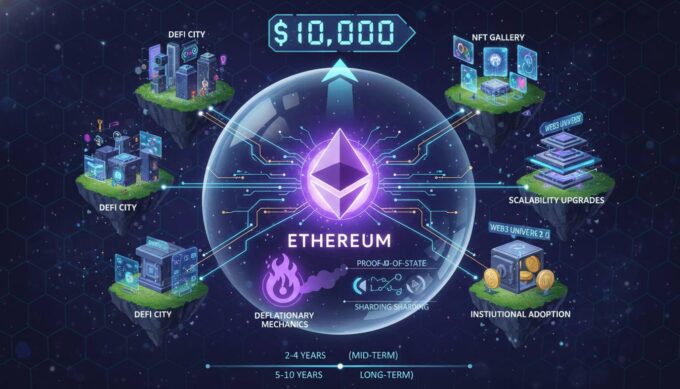
Ethereum maintains its position as the leading smart contract platform, powering the majority of decentralized applications, DeFi protocols, and NFT ecosystems.
Ethereum’s Market Position
Ethereum’s transition to proof-of-stake through “The Merge” and subsequent upgrades significantly reduced energy consumption while improving scalability. The network processes approximately 1 million transactions daily, supporting thousands of decentralized applications across financial services, gaming, and digital identity sectors.
Network Statistics:
• Total value locked in DeFi: Exceeded $100 billion
• Daily active addresses: Consistently above 500,000
• NFT trading volume: Major marketplace platform
• Developer activity: Highest among blockchain platforms
Ethereum’s EVM (Ethereum Virtual Machine) compatibility enables seamless integration with numerous Layer-2 networks and sidechains, expanding the ecosystem’s reach. Institutional interest in Ethereum-based assets grew substantially, with multiple asset managers launching Ethereum-focused investment products.
Growth Catalysts
Ethereum’s scalability roadmap includes continued layer-2 development and future protocol upgrades targeting enhanced throughput. The asset’s deflationary tokenomics, achieved through EIP-1559 fee burning mechanism, creates buy pressure as network activity grows. Enterprise adoption expanded in 2024-2025, with major corporations exploring Ethereum-based solutions for supply chain, digital assets, and identity verification.
Solana (SOL): High-Performance Blockchain
Solana emerged as a leading high-performance blockchain, offering fast transaction speeds and low fees that attract developers and users seeking alternatives to Ethereum’s congestion issues.
Why Solana Stands Out
Solana processes thousands of transactions per second, dramatically exceeding Ethereum’s base layer capacity. The network’s combination of speed and cost efficiency attracted significant developer interest, with numerous DeFi protocols, NFT platforms, and gaming applications launching on Solana.
Performance Metrics:
• Transactions per second: 65,000+ theoretical capacity
• Average transaction cost: Less than $0.01
• Total active validators: Among the largest proof-of-stake networks
• Ecosystem projects: Thousands of active applications
The network experienced substantial growth in 2024, with increased institutional attention and expanded real-world utility. Mobile device integration and consumer-facing applications drove user adoption beyond traditional crypto-native audiences. Developer tooling improvements lowered entry barriers for building on Solana.
Challenges and Considerations
Solana has experienced network outages historically, raising questions about decentralization and reliability. However, network improvements and governance reforms addressed several technical concerns. Competition from other high-performance blockchains remains intense, requiring continued innovation to maintain market position.
Chainlink (LINK): Oracle Network Infrastructure
Chainlink provides essential infrastructure connecting blockchain networks with real-world data, serving as the backbone for decentralized finance and countless blockchain applications.
Chainlink’s Essential Role
As the leading oracle network, Chainlink enables smart contracts to access off-chain data, including price feeds, weather information, and event outcomes. This functionality proves critical for financial applications requiring accurate pricing data, insurance contracts triggering based on real-world events, and supply chain tracking systems.
Network Importance:
• DeFi integrations: Hundreds of protocols rely on Chainlink data
• Data feeds: Covering thousands of asset pairs across multiple markets
• Enterprise adoption: Major corporations utilize Chainlink services
• Cross-chain compatibility: Supporting numerous blockchain networks
The CCIP (Cross-Chain Interoperability Protocol) launch positioned Chainlink as essential infrastructure for blockchain interoperability, supporting the growing multi-chain ecosystem. Revenue growth followed increased DeFi activity and enterprise adoption, demonstrating sustainable business model fundamentals.
Investment Considerations
Chainlink’s utility-driven value proposition provides more stable demand compared to purely speculative tokens. However, competition in the oracle space increased, with alternatives offering similar services. Network effects and established integrations create meaningful competitive advantages, though technological evolution could shift market dynamics.
Polkadot (DOT): Interoperability Ecosystem
Polkadot enables communication between different blockchain networks, positioning itself as essential infrastructure for a multi-chain future.
The Interoperability Vision
Polkadot’s unique architecture allows specialized blockchains (parachains) to connect and share security while maintaining independent functionality. This approach addresses blockchain scalability and specialization challenges while enabling cross-chain asset transfers and data sharing.
Polkadot Ecosystem:
• Parachain slots: Dozens of specialized blockchains deployed
• Cross-chain bridges: Connecting major blockchain networks
• Governance: Advanced on-chain governance capabilities
• Development activity: Active developer community
The network’s token economics reward participation through staking, creating demand for DOT tokens while securing network operations. Substrate framework adoption for building custom blockchains expanded the ecosystem’s reach beyond the main Polkadot network.
Growth Potential
Interoperability becomes increasingly important as blockchain adoption grows and users require seamless interaction across different networks. Polkadot’s established position and proven technology provide competitive advantages, though competing interoperability solutions challenge market share.
Comparing Investment Profiles
| Cryptocurrency | Primary Use Case | Market Position | Risk Level |
|---|---|---|---|
| Bitcoin | Store of value | Dominant leader | Moderate |
| Ethereum | Smart contracts | Platform leader | Moderate |
| Solana | High-speed dApps | Performance leader | Moderate-High |
| Chainlink | Oracle services | Infrastructure essential | Moderate |
| Polkadot | Interoperability | Early mover | Moderate-High |
Investment Considerations by Profile
Conservative Investors: Bitcoin and Ethereum offer established networks with institutional adoption but limited upside compared to smaller projects. These assets suit investors prioritizing stability over maximum gains.
Growth-Oriented Investors: Solana and Polkadot present higher potential returns with corresponding risk increases. These projects require higher confidence in execution and technological adoption.
Infrastructure Focus: Chainlink provides exposure to essential blockchain infrastructure without direct competition to platform cryptocurrencies. Utility demand creates more predictable revenue dynamics.
How to Evaluate Cryptocurrency Investments
Successful cryptocurrency investing requires systematic analysis beyond simple price tracking. Investors should develop frameworks evaluating multiple dimensions of potential investments.
Fundamental Analysis Framework
Technology Assessment: Evaluate the underlying blockchain’s scalability, security, and innovation capacity. Technical advantages often translate to long-term competitive positioning. Development activity on platforms like GitHub indicates continued innovation.
Adoption Metrics: User growth, transaction volumes, and developer activity provide insights into network health beyond price movements. Sustainable adoption creates organic demand supporting value.
Team and Governance: Leadership quality, transparency, and community governance mechanisms influence project longevity. Decentralized governance increasingly matters as networks mature.
Competitive Landscape: Understand how projects compare to alternatives and barriers preventing competition from displacing current leaders. Network effects often create durable competitive advantages.
Risk Management Strategies
Portfolio diversification across multiple cryptocurrencies reduces single-asset risk exposure. Position sizing should reflect risk tolerance and investment timeline, with volatile assets comprising smaller portfolio percentages for most investors. Stop-loss strategies can limit downside, though they may trigger during temporary market dislocations.
Common Investment Mistakes to Avoid
Emotional Decision-Making
FOMO (Fear of Missing Out) drives many investors to buy at market peaks, while panic selling during downturns locks in losses. Establishing investment theses before market movements helps maintain discipline during volatility.
Common Errors:
• Chasing price increases without understanding fundamentals
• Investing more than comfortable losing
• Ignoring diversification across asset classes
• Failing to research before investing
Overlooking Fees and Taxes
Transaction fees, especially during network congestion, significantly impact returns for active traders. Tax implications vary by jurisdiction, with many countries treating cryptocurrency gains as taxable events. Professional tax advice helps optimize after-tax returns.
⚠️ CRITICAL RISK: Cryptocurrency markets remain highly volatile, with prices capable of declining 50% or more during bear markets. Never invest funds needed for essential expenses. Only allocate capital that investors can afford to lose entirely.
Expert Insights on Crypto Market Dynamics
Market analysts emphasize the importance of distinguishing between sustainable adoption and speculative hype when evaluating cryptocurrency potential.
👤 Industry Analyst Perspective
“Institutional adoption patterns in 2024-2025 suggest growing acceptance of cryptocurrency as an asset class, though valuation frameworks remain evolving. Projects with clear utility and real-world adoption demonstrate more sustainable price trajectories compared to purely speculative tokens.”
📊 ADOPTION METRICS COMPARISON
| Metric | Bitcoin | Ethereum | Solana |
|——–|———|———-|——–|
| Active Addresses (daily) | 1M+ | 500K+ | 50M+ |
| Institutional Adoption | Strong | Growing | Emerging |
| Developer Ecosystem | Largest | Largest | Growing |
| Enterprise Use Cases | Store of value | Multiple | DeFi/Gaming |
Frequently Asked Questions
Which cryptocurrency has the highest potential for 2025?
No cryptocurrency can be guaranteed to increase in value. Bitcoin and Ethereum offer established networks with institutional adoption. Emerging platforms like Solana and Polkadot present higher growth potential but also higher risk. Research thoroughly and invest only what you can afford to lose.
Should I invest in Bitcoin or Ethereum?
Both serve different purposes in a cryptocurrency portfolio. Bitcoin functions primarily as a store of value, while Ethereum powers applications and DeFi. Many investors hold both as part of diversified strategies. Your allocation depends on risk tolerance and investment goals.
How much should I invest in cryptocurrency?
Financial experts typically recommend limiting cryptocurrency to 1-5% of a diversified investment portfolio, if included at all. Never invest funds needed for essential expenses or emergency savings. Consider dollar-cost averaging to reduce timing risk.
Is cryptocurrency safe to invest in?
Cryptocurrency investments carry substantial risk including potential total loss. Markets remain highly volatile, regulatory uncertainty exists, and technical failures can occur. Investors should understand these risks thoroughly before participating.
What drives cryptocurrency prices?
Cryptocurrency prices reflect supply and demand dynamics, adoption rates, technological developments, regulatory news, and broader market sentiment. Unlike stocks, cryptocurrencies lack traditional fundamental metrics like earnings, making valuation challenging.
When is the best time to invest in cryptocurrency?
Timing the market is extremely difficult, even for professionals. Dollar-cost averaging—investing fixed amounts at regular intervals—helps reduce timing risk. Avoid making investment decisions based on short-term price movements or hype.
Conclusion
The cryptocurrency market in 2025 offers both substantial opportunities and significant risks. Bitcoin and Ethereum provide established foundations with institutional adoption and proven utility. Solana, Chainlink, and Polkadot represent different aspects of blockchain innovation with各自的增长驱动因素。
Successful cryptocurrency investing requires thorough research, realistic expectations, and disciplined risk management. No investment is guaranteed to “explode,” and claims suggesting certain outcomes typically reflect speculation rather than analysis. Focus on understanding fundamental value drivers, maintaining diversified portfolios, and investing only amounts you can afford to lose completely.
The blockchain ecosystem continues maturing, with utility-driven projects increasingly distinguishing themselves from purely speculative tokens. Whether any specific cryptocurrency will “explode” depends on complex interactions between adoption, technology, regulation, and market sentiment that remain inherently unpredictable.






Leave a comment