

Solana has emerged as one of the most compelling blockchain narratives of the past two years, with its native token SOL experiencing dramatic price appreciation that has captured the attention of both retail and institutional investors. Understanding the underlying drivers behind this surge is essential for anyone looking to navigate the current crypto landscape intelligently.
Key Insights
– Solana’s transaction speeds exceed 65,000 TPS, far surpassing Ethereum’s ~15-30 TPS
– The network’s fee structure averages just $0.0015 per transaction compared to Ethereum’s $10-$50 during congestion
– Developer activity on Solana grew over 40% year-over-year as of late 2024
– Major金融机构 have increasingly included Solana in their crypto custody offerings
The reasons behind Solana’s price appreciation extend beyond simple market speculation. A confluence of technical advantages, ecosystem growth, and shifting market dynamics has created a perfect storm driving value to the network. This article examines seven fundamental factors that have contributed to Solana’s significant price surge and what investors should consider moving forward.
1. Superior Technical Performance and Network Efficiency
Solana’s architectural design represents a fundamental departure from earlier blockchain protocols, prioritizing speed and scalability without sacrificing decentralization. The network employs a unique proof-of-history mechanism combined with proof-of-stake, enabling throughput that dwarfed competitors for years after its mainnet launch.
The technical superiority manifests in concrete numbers that matter to users and developers. While Ethereum processes approximately 15-30 transactions per second under normal conditions, Solana handles thousands, with testnet demonstrations showing capacity exceeding 65,000 TPS. This dramatic difference translates directly to user experience—where Ethereum users might pay $20 or more in gas fees during busy periods, Solana transactions typically cost less than a penny.
The network’s reliability has improved substantially following earlier stability issues. Solana experienced multiple outages in 2021 and 2022, which initially damaged investor confidence. However, the team implemented significant upgrades, including the Firedancer client developed by Jump Crypto, which promises to further enhance network resilience and performance. These improvements have restored faith in the platform’s ability to handle mainstream adoption scenarios.
Developers consistently cite the technical performance as the primary motivation for building on Solana. The low latency and minimal costs enable use cases that would be economically unfeasible on slower, more expensive networks. Gaming applications, high-frequency trading platforms, and micropayment systems all benefit enormously from Solana’s infrastructure choices.
2. Explosive Growth in Decentralized Finance
The decentralized finance ecosystem on Solana has expanded dramatically, creating substantial value accrual mechanisms for SOL token holders. Total value locked in Solana-based DeFi protocols has reached billions of dollars, with established platforms like Raydium, Marinade Finance, and Jupiter Aggregator leading the charge.
DeFi protocols on Solana offer familiar financial primitives—lending, borrowing, trading, and yield farming—but with execution speeds and cost structures that open new possibilities. Users can execute trades, supply liquidity, and manage portfolios without the friction that characterizes Ethereum-based alternatives. This frictionless experience has attracted users migrating from other ecosystems seeking better yields and smoother interactions.
The ecosystem has also seen innovative financial products emerge that wouldn’t be viable on other networks. Instant liquidations, complex multi-step trading strategies, and real-time algorithmic trading all become practical when transaction costs approach zero and confirmation times measure in milliseconds. These capabilities attract sophisticated participants who recognize the edge that Solana provides.
Revenue generated from DeFi activities—primarily through trading fees and protocol revenues—flows back to the network in various forms. While SOL doesn’t directly capture protocol revenue like some utility tokens, the activity generates demand for the token for staking, governance participation, and fee payment, creating organic buy pressure that supports price appreciation.
3. Memecoin Renaissance and Consumer Crypto Adoption
Perhaps no factor has contributed more visibly to Solana’s recent price action than the explosive growth of memecoins on the network. The success of tokens like BONK, dogwifhat, and WIF demonstrated that Solana could capture retail enthusiasm and speculative interest that typically gravitates toward lower-cost, high-volatility assets.
The memecoin phenomenon on Solana differs meaningfully from Ethereum’s ERC-20 memecoins in terms of accessibility and community dynamics. Lower transaction costs mean that smaller traders can participate meaningfully in token launches and trading activities without being priced out by gas fees. This democratization has fostered vibrant communities that drive adoption and network activity.
The success of these tokens has created a self-reinforcing cycle. Early adopters who profited from memecoin gains reinvest in the ecosystem through staking, NFT purchases, and supporting other Solana-based projects. The visibility generated by 100x or 1000x returns attracts new participants, expanding the user base and increasing network activity across all sectors.
Beyond memecoins specifically, Solana has become the preferred network for consumer-facing crypto applications. Mobile payment solutions, music NFT platforms, and gaming projects have found Solana’s user experience superior for mainstream audiences. This positioning as the “consumer chain” has differentiated Solana from competitors focused primarily on institutional or technical users.
4. Institutional Adoption and Corporate Interest
The narrative around Solana has shifted significantly as institutional participants have shown increasing interest in the network. Major cryptocurrency custodians including Coinbase Custody, Fireblocks, and BitGo have added SOL support, enabling institutional investors to allocate capital to Solana through compliant infrastructure.
Several factors make Solana attractive to institutional allocators. The technical reliability improvements have addressed earlier concerns about network stability. The clear differentiation from Ethereum in terms of performance creates a compelling case for portfolio diversification. Additionally, Solana’s energy efficiency compared to proof-of-work networks aligns with increasingly important ESG considerations.
ETF speculation has also contributed to price momentum. The approval of spot Bitcoin ETFs and subsequent discussions around Ethereum ETF approvals have created expectations that similar products might eventually include Solana. While no Solana ETF has received approval, the possibility creates futures-based demand and speculative positioning.
Corporate treasury adoption, while less visible than institutional fund flows, represents another meaningful source of demand. Companies recognizing Solana’s utility for payments, NFTs, or blockchain infrastructure have begun accumulating SOL for operational purposes. This organic demand from actual use cases provides a floor support that pure speculative markets might not sustain.
5. Thriving Developer Ecosystem and Application Layer
The number of active developers building on Solana has grown substantially, creating a robust application layer that supports continued network value. Developer counts, as measured by various analytics platforms, consistently rank Solana among the top blockchain ecosystems for new project creation and code commits.
This developer momentum stems from multiple factors. The documentation quality and developer tooling on Solana are considered excellent, reducing the learning curve for new teams. The technical advantages discussed earlier mean developers can build applications that would be impractical elsewhere. Grant programs from the Solana Foundation have also helped bootstrap promising projects during early stages.
The application diversity on Solana has expanded considerably. Beyond DeFi and memecoins, the network hosts significant activity in areas including gaming, physical goods provenance, identity solutions, and social media platforms. Each successful application brings users, transactions, and attention to the network, creating positive feedback loops that benefit all participants.
The success of major applications has created network effects that attract further development. When promising projects choose Solana, they bring their user communities and potentially inspire competitors or complementary services. This organic ecosystem growth feels more sustainable than purely speculative price action, as it creates lasting utility and adoption.
6. Strategic Tokenomics and Staking Economics
Solana’s tokenomics have evolved in ways that support price appreciation while maintaining network security and participation. The staking mechanism creates inherent buy pressure by removing a significant portion of circulating supply from active trading.
SOL token holders can stake their holdings to participate in network consensus and earn approximately 6-8% annual yields in nominal terms. These staking rewards, combined with the appreciation potential, create an attractive risk-adjusted return that encourages long-term holding behavior. The locked staking supply reduces available liquidity for trading, which can amplify price movements in either direction.
The inflation schedule built into Solana’s economics provides predictability that markets appreciate. Unlike some protocols with highly variable inflation, Solana’s model allows participants to model expected returns and network dynamics with reasonable confidence. This transparency supports institutional adoption and reduces uncertainty premia.
Token unlock schedules from early investor and team allocations have been a subject of market concern at various points. However, the market has absorbed these unlocks more smoothly than some critics predicted, suggesting that demand growth has outpaced dilution concerns. The Foundation and community have also implemented various mechanisms to reduce selling pressure from unlocked tokens.
7. Broader Market Dynamics and Narrative Positioning
Solana’s price surge occurs within a favorable broader cryptocurrency market environment that has seen renewed interest and capital inflows. The sector’s recovery from the 2022 downturn, combined with anticipated regulatory clarity and macroeconomic factors, has created a risk-on environment that benefits risk assets including cryptocurrencies.
The narrative positioning of Solana as an “Ethereum killer” or viable alternative has evolved into a more nuanced “multi-chain future” framing that many find more credible. Rather than displacing Ethereum entirely, Solana now occupies a distinct market position focused on specific use cases and user segments. This differentiation reduces direct competition while highlighting Solana’s unique strengths.
Regulatory developments have generally favored Solana relative to some competitors. The network’s focus on compliance and its treatment by US regulators has been relatively favorable compared to privacy-focused coins or those with less transparent corporate structures. This regulatory clarity reduces uncertainty and makes Solana more attractive to risk-averse institutional capital.
The overall crypto market capitalization growth has lifted most boats, but Solana has outperformed significantly. This suggests that ecosystem-specific factors, not just general market movements, drive Solana’s price action. The combination of fundamental improvements and market positioning has created a compelling investment narrative that resonates with both technical and non-technical audiences.
Frequently Asked Questions
Is Solana better than Ethereum for everyday transactions?
Solana offers significant advantages for everyday transactions due to its lower costs and faster confirmation times. For transactions under $100, Solana’s sub-cent fees make it vastly more practical than Ethereum, where users might pay more in fees than the transaction value. However, Ethereum’s first-mover advantage, larger developer ecosystem, and deeper liquidity make it preferable for certain high-value DeFi activities.
What caused Solana’s major price increases in 2024?
Solana’s 2024 price appreciation resulted from multiple factors including the memecoin boom (particularly tokens like BONK and WIF), improved network reliability following technical upgrades, increased institutional adoption through custody solutions, and the broader crypto market recovery. Developer activity and DeFi growth also contributed substantially to the network’s value proposition.
Should I invest in Solana now given its recent price increases?
Past performance doesn’t guarantee future results, and Solana’s significant price increases mean current valuations reflect substantial expectations. Investors should consider their risk tolerance, portfolio diversification, and understanding of the project before investing. The cryptocurrency market remains highly volatile, and any investment should represent capital you’re prepared to potentially lose.
How does Solana’s technical architecture enable such high transaction speeds?
Solana combines several innovations including proof-of-history, which creates a historical record that allows nodes to verify order without waiting for global consensus, and a highly optimized implementation that leverages modern hardware capabilities. The network also uses a parallel processing approach that allows multiple smart contracts to execute simultaneously rather than sequentially.
What are the main risks to Solana’s continued growth?
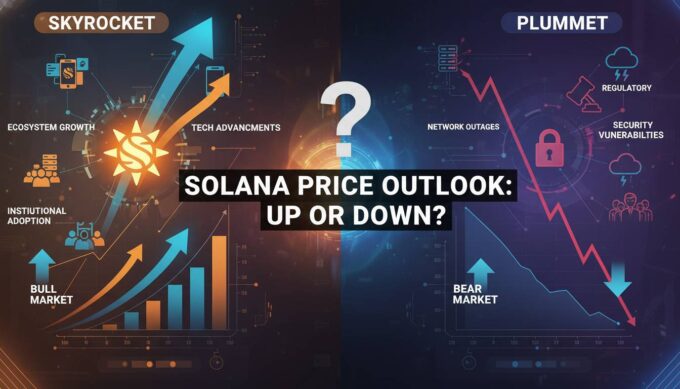
Key risks include competition from other high-performance blockchains, potential technical challenges as the network scales further, regulatory uncertainty affecting the broader crypto sector, and market cycle volatility. Solana has also experienced network outages in the past, though significant improvements have addressed many reliability concerns.
How can I stake my Solana holdings?
Staking SOL requires a Solana-compatible wallet such as Phantom, Solflare, or Ledger. Users can stake directly through these wallets by selecting a validator to delegate their tokens. Staking rewards typically range from 6-8% annually, though exact yields vary based on validator performance and network conditions. Most wallets offer simplified interfaces that make staking accessible to non-technical users.
The factors driving Solana’s price appreciation reflect both the network’s genuine technical achievements and the speculative dynamics inherent to cryptocurrency markets. For investors evaluating Solana’s potential, understanding these drivers provides context for both the opportunities and risks involved. The combination of technical superiority, ecosystem growth, and favorable market positioning suggests Solana will remain a significant player in the blockchain space, though participants should approach with appropriate risk management and realistic expectations about volatility.






Leave a comment