

Bitcoin has transformed from a niche digital experiment into a trillion-dollar asset class that commands the attention of institutional investors, retail traders, and governments worldwide. As the cryptocurrency market matures, the question of Bitcoin’s future value remains one of the most debated topics in finance. Understanding what drives Bitcoin’s price, how experts approach predictions, and what factors could shape its trajectory in the coming years is essential for anyone considering an investment.
This article examines the landscape of Bitcoin price predictions, analyzes the methodologies experts use, explores the key drivers of future value, and provides a framework for evaluating these forecasts critically. Whether you are a seasoned investor or newly curious about cryptocurrency, understanding the nuances behind Bitcoin’s potential growth will help you make more informed decisions.
Understanding Bitcoin’s Value Drivers
Before examining predictions, it is important to understand what fundamentally drives Bitcoin’s value. Unlike traditional assets such as stocks or bonds, Bitcoin operates on a fixed supply model with no central authority controlling its monetary policy. This unique characteristics creates several value drivers that analysts consider when making projections.
The most significant driver is Bitcoin’s capped supply of 21 million coins, programmed into its protocol through the code that governs the network. This scarcity mechanism mimics precious metals like gold and forms the foundation of many bullish price models. According to data from various blockchain analytics platforms, approximately 19.6 million Bitcoin had been mined as of early 2024, leaving roughly 1.4 million coins remaining to enter circulation over the coming decades.
Network adoption represents another critical factor. As more individuals, businesses, and institutions hold and transact in Bitcoin, the network effect strengthens, potentially increasing utility and demand. Institutional adoption, in particular, has accelerated significantly since 2020, with major financial institutions launching Bitcoin-focused investment products and payment processors integrating cryptocurrency transactions.
Regulatory developments also play a substantial role in shaping Bitcoin’s value trajectory. Government decisions regarding cryptocurrency classification, taxation, and outright bans can dramatically impact market sentiment and institutional willingness to allocate capital. The regulatory landscape varies significantly across different jurisdictions, with the United States, European Union, and Asia-Pacific regions each developing distinct frameworks.
Market liquidity and infrastructure development, including exchange availability, custodial solutions, and derivatives markets, also influence Bitcoin’s price discovery and long-term value proposition. As these elements mature, they potentially reduce volatility and attract additional capital from mainstream investors.
Historical Context and Price Performance
Bitcoin’s price history provides essential context for understanding future predictions. Since its creation in 2009, Bitcoin has experienced remarkable growth alongside dramatic drawdowns, creating a pattern that both attracts speculators and concerns traditional investors.
The most notable bull runs occurred in 2013, when Bitcoin rose from under $100 to nearly $1,000 before retreating; 2017, when prices surged to nearly $20,000 following initial coin offering mania; and 2020-2021, when pandemic-era monetary policy stimulus drove Bitcoin to an all-time high of approximately $69,000 in November 2021. Each cycle has been followed by significant corrections, with drawdowns exceeding 80% in some instances.
The 2022 market cycle proved particularly challenging, as Bitcoin fell from its November 2021 peak to a cycle low of approximately $15,500 in late 2022, representing a decline of over 77%. This correction coincided with broader macroeconomic concerns, including aggressive Federal Reserve interest rate hikes and high inflation, which reduced appetite for speculative assets.
By 2023 and into 2024, Bitcoin recovered substantially, climbing back above $40,000 and eventually surpassing $70,000 in early 2024, driven partly by anticipation and approval of spot Bitcoin exchange-traded funds in the United States. This historical pattern of volatility, followed by recovery to new highs, forms the basis for many long-term optimistic predictions.
| Year | Price Movement | Notable Events |
|---|---|---|
| 2009-2012 | Launch and early trading | First commercial transactions |
| 2013 | Peak ~$1,100, then correction | Silk Road closure, China restrictions |
| 2017 | Rise to ~$20,000 | ICO boom, mainstream attention |
| 2020-2021 | Pandemic rally to ~$69,000 | Institutional adoption, ETF speculation |
| 2022 | Decline to ~$15,500 | Rate hikes, FTX collapse |
| 2024 | Recovery to new highs | Spot ETF approval |
Expert Price Predictions: Methodology and Outlook
Experts approach Bitcoin price predictions using various methodologies, each with distinct assumptions and timeframes. Understanding these approaches helps investors evaluate the credibility and limitations of specific forecasts.
Stock-to-Flow Models gained significant popularity following analysis by anonymous analyst PlanB, who created a model correlating Bitcoin’s price with its stock-to-flow ratio—a measure of scarcity based on existing supply relative to new production. The original model predicted six-figure Bitcoin prices following the 2020 halving, and while Bitcoin did reach these levels, the precise timeline and magnitude deviated from projections. Subsequent iterations have adjusted for changing market dynamics.
On-Chain Analytics involve examining blockchain data, including wallet addresses, exchange flows, mining activity, and holder behavior. Firms like Glassnode and Chainalysis provide metrics such as realized cap, HODL waves, and exchange reserves to gauge market sentiment and potential price movements. These indicators suggest that long-term holders continue accumulating during price weakness, historically a bullish signal.
Institutional Research from major financial firms has become increasingly prominent. Analyst projections from institutions like JPMorgan Chase, Goldman Sachs, and various cryptocurrency-native research firms provide frameworks based on adoption curves, competitive positioning against gold, and macroeconomic scenarios. These predictions typically span shorter timeframes and include range estimates acknowledging significant uncertainty.
As of early 2024, expert predictions span a remarkably wide range. Conservative estimates project Bitcoin could reach $80,000 to $120,000 by late 2024 or 2025, while more aggressive forecasts suggest $150,000 to $500,000 within similar timeframes. Long-term projections extending to 2030 and beyond often include six-figure甚至 seven-figure scenarios, though these typically carry substantial uncertainty and depend on unlikely adoption and regulatory scenarios.
Factors That Could Drive Future Value
Several key factors could influence Bitcoin’s value trajectory in coming years, and understanding these variables helps create a more nuanced investment perspective.
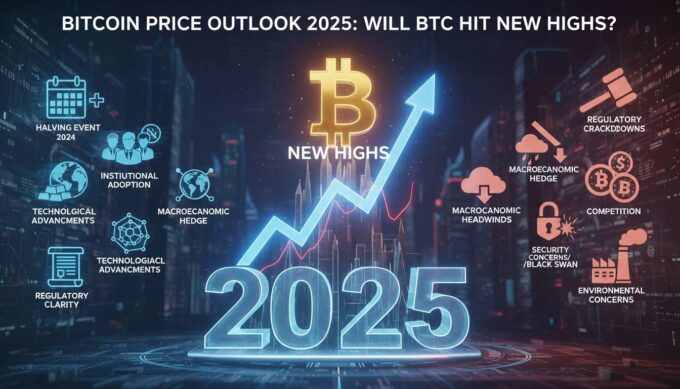
Institutional Adoption represents perhaps the most significant near-term catalyst. The approval of spot Bitcoin ETFs in the United States opened the asset class to mainstream investors through familiar brokerage accounts and retirement vehicles. Additional institutional adoption, including corporate treasury allocations and sovereign wealth fund interest, could substantially increase demand.
Macroeconomic Conditions historically correlate with Bitcoin performance. Arguments positioning Bitcoin as an inflation hedge and alternative monetary asset gain traction during periods of monetary expansion and currency debasement concerns. Conversely, rising interest rates and risk-off sentiment have historically pressured cryptocurrency prices.
Regulatory Clarity could significantly impact Bitcoin’s investment case. Clear, favorable regulatory frameworks in major economies might attract institutional capital and reduce uncertainty premiums currently embedded in prices. Conversely, restrictive regulations could limit adoption and depress valuations.
Network Development through improvements in scalability, privacy, and smart contract capabilities could expand Bitcoin’s use cases beyond a store of value to include more complex financial applications. The maturation of the Lightning Network for payment scaling represents one example of technical development potentially influencing utility.
Competitive Dynamics including the rise of central bank digital currencies, competing cryptocurrencies, and alternative store of value assets could influence Bitcoin’s market positioning. While Bitcoin maintains the strongest brand recognition and network effect in cryptocurrency, technological obsolescence remains a theoretical risk.
Risk Factors and Investment Considerations
Responsible analysis of Bitcoin’s future value requires acknowledging significant risks that could impact predictions, either positively or negatively.
Price Volatility remains Bitcoin’s most distinctive characteristic. Daily price swings of 5% or greater occur regularly, and investors should be prepared for scenarios where portfolios experience substantial drawdowns. This volatility makes Bitcoin unsuitable for investors who cannot tolerate significant loss potential.
Regulatory Risk encompasses the possibility of restrictive legislation in major markets. Bans or severe restrictions in the United States, European Union, or other significant economies could dramatically impact Bitcoin’s liquidity and institutional adoption.
Technological Risk includes the possibility that Bitcoin could be superseded by technically superior cryptocurrencies or that critical security vulnerabilities could emerge. While Bitcoin’s network has maintained impressive uptime and security since its inception, future unknowns always exist.
Liquidity Risk affects certain investor categories, particularly those holding large positions relative to daily trading volume. Large sellers may experience slippage, impacting realized returns.
Operational Risk includes the possibility of exchange hacks, loss of private keys, or other technical failures resulting in permanent loss of assets. Proper security practices, including self-custody solutions for significant holdings, represent essential considerations.
Investors should only allocate capital to Bitcoin that they can afford to lose entirely, maintain proper security protocols, and consider Bitcoin as part of a diversified portfolio strategy rather than a singular bet on future performance.
Comparing Bitcoin to Traditional Assets
Understanding Bitcoin’s potential role in a portfolio requires comparing its characteristics to traditional assets, each of which offers distinct risk and return profiles.
| Asset Class | Volatility | Correlation to Stocks | Store of Value Narrative | Institutional Adoption |
|---|---|---|---|---|
| Bitcoin | Very High | Low to Negative | Strong (digital gold) | Growing Rapidly |
| Gold | Low | Low | Very Strong | Very High |
| Real Estate | Moderate | Moderate | Strong | Very High |
| Bonds | Low | Negative | Moderate | Very High |
Bitcoin’s low historical correlation to traditional asset classes theoretically offers diversification benefits, though this relationship has shown variability during periods of market stress. During the COVID-19 market correction in early 2020 and the broader 2022 decline, Bitcoin moved more closely with stocks than its proponents might suggest.
The “digital gold” narrative positions Bitcoin as a modern alternative to precious metals, with advantages including portability, divisibility, and transparent supply. Critics note Bitcoin’s shorter track record, greater volatility, and lack of industrial demand compared to gold.
Practical Framework for Evaluating Predictions
Investors encountering Bitcoin price predictions should apply critical analysis rather than accepting forecasts at face value. Several principles help evaluate the credibility and usefulness of specific projections.
First, consider the timeframe of predictions. Short-term forecasts over days or weeks essentially amount to speculation, while longer-term projections over years or decades carry different uncertainty profiles. Predictions spanning multiple years should include explicit acknowledgment of the wide confidence intervals involved.
Second, examine the methodology behind forecasts. Predictions based on rigorous analysis of adoption curves, on-chain metrics, or macroeconomic scenarios carry more weight than round-number targets without supporting framework. Understanding what assumptions underlie specific predictions helps investors assess their reasonableness.
Third, consider the incentive alignment of forecast providers. Analysts with existing Bitcoin holdings may have motivations to promote bullish scenarios, while those with short positions might emphasize downside risks. Diverse sources and independent verification improve reliability.
Fourth, recognize that extreme predictions capture attention but often prove incorrect. Whether extremely bullish or bearish, outlier forecasts typically receive outsized media coverage despite limited predictive accuracy. More moderate scenarios spanning wide ranges often prove more reliable over time.
Finally, remember that no one can predict Bitcoin’s future value with certainty. The cryptocurrency market remains highly speculative, and even the most sophisticated analysis cannot account for all variables affecting price discovery. Maintaining appropriate skepticism while remaining open to potential upside represents a balanced approach.
Conclusion
Bitcoin’s future value remains inherently uncertain, yet the cryptocurrency has demonstrated remarkable resilience and growth since its inception. Expert predictions span enormous ranges, from conservative scenarios maintaining current prices to bullish projections envisioning substantial appreciation. This diversity reflects the genuine difficulty in forecasting an asset class influenced by technological innovation, regulatory developments, macroeconomic forces, and evolving market sentiment.
For investors considering Bitcoin allocation, understanding the fundamental drivers of value, historical performance patterns, and risk factors provides essential context. The cryptocurrency’s unique characteristics—including fixed supply, decentralized architecture, and growing institutional adoption—create potential for significant value appreciation while introducing substantial volatility and uncertainty.
Investment decisions should reflect individual risk tolerance, time horizons, and portfolio construction objectives. Bitcoin’s high volatility and speculative nature make it inappropriate for all investors, while its potential diversification benefits and store of value narrative appeal to others seeking alternatives to traditional assets. Approaching Bitcoin with clear understanding, appropriate expectations, and disciplined risk management positions investors to navigate whatever future value trajectory unfolds.
Frequently Asked Questions
How reliable are Bitcoin price predictions?
Bitcoin price predictions should be treated as speculative estimates rather than definitive forecasts. Even professional analysts frequently miss actual price movements by substantial margins. The cryptocurrency market remains highly volatile and influenced by unpredictable factors including regulatory changes, macroeconomic shifts, and evolving investor sentiment. Rather than relying on specific price targets, investors should focus on understanding the underlying factors driving value and maintain appropriate position sizing.
Should I invest in Bitcoin for the long term?
Long-term Bitcoin investment may suit investors who understand the asset’s volatility, can tolerate significant portfolio drawdowns, and believe in its store of value proposition. Historical performance shows recovery from major corrections, though past performance does not guarantee future results. Investors should only allocate capital they can afford to lose entirely and consider Bitcoin as part of a diversified portfolio rather than a singular investment thesis.
What is the Bitcoin halving and how does it affect price?
The Bitcoin halving occurs approximately every four years, reducing the block reward paid to miners by half. This event decreases the rate of new Bitcoin entering circulation, theoretically creating upward price pressure through reduced supply. Historical halvings have preceded significant bull runs, though correlation does not guarantee future results. The most recent halving occurred in April 2024.
How much of my portfolio should be in Bitcoin?
There is no universal allocation recommendation, as appropriate exposure depends on individual risk tolerance, age, investment goals, and other portfolio holdings. Some financial advisors suggest limiting cryptocurrency allocations to 1-5% of a diversified portfolio, while others with higher risk tolerance and longer time horizons might allocate more. Conservative investors should lean toward lower allocations given Bitcoin’s volatility.
Is Bitcoin a good hedge against inflation?
Bitcoin’s positioning as an inflation hedge remains debated. Its fixed supply contrasts with fiat currencies that can be expanded arbitrarily, theoretically protecting purchasing power during periods of monetary expansion. However, Bitcoin has shown high correlation to risk assets during inflationary periods, limiting its practical hedging effectiveness. Gold maintains a longer track record as an inflation hedge with more consistent performance during uncertain times.









Leave a comment