

Solana has emerged as one of the most talked-about cryptocurrencies in the market, with its native token SOL experiencing dramatic price movements that have captivated both institutional and retail investors. Understanding whether Solana represents a sound investment requires examining its technological foundation, market position, competitive advantages, and the inherent risks of cryptocurrency markets.
Quick Answer
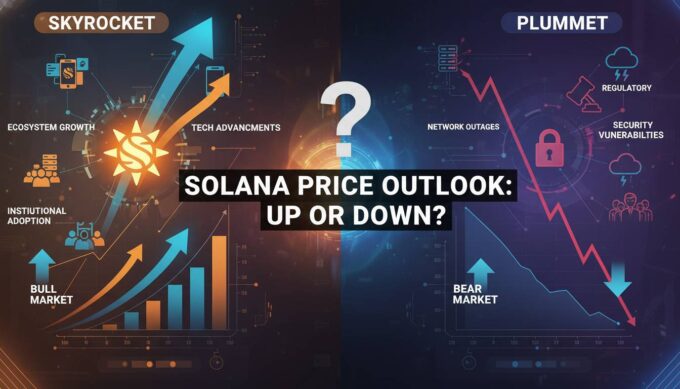
Solana can be a good investment for certain investors, but it carries significant risks. The blockchain offers exceptional technical capabilities, including high transaction speeds and low fees, which have driven substantial ecosystem growth. However, investors must weigh historical network stability concerns, market volatility, and the regulatory uncertainty facing the entire cryptocurrency sector. Success with SOL investment depends on thorough research, appropriate position sizing, and alignment with individual risk tolerance.
📊 KEY MARKET DATA
– $12.8B — Solana’s market capitalization (ranked #5-7 as of 2024)
– 65,000 TPS — Theoretical maximum transactions per second
– $0.0008 — Transaction cost average (among the lowest in blockchain)
– 2,100+ — Active projects in Solana ecosystem
Understanding Solana’s Technology and Foundation
Solana was founded in 2020 by Anatoly Yakovenko, a former Qualcomm engineer, with the explicit goal of solving the scalability trilemma facing blockchain networks—the challenge of achieving decentralization, security, and scalability simultaneously. The project launched its mainnet in 2020 and quickly attracted attention for its innovative approach to consensus and transaction processing.
The blockchain utilizes a unique combination of technologies, including Proof of History (PoH), a cryptographic clock that allows the network to process transactions sequentially without waiting for global validator agreement on time. This architectural choice enables Solana to achieve theoretical throughput of 65,000 transactions per second (TPS), dramatically outpacing Ethereum’s approximately 15-30 TPS and even Visa’s reported 24,000 TPS capacity.
Proof of Stake with Tower BFT forms the consensus mechanism, where validators stake SOL tokens to participate in network security. The Tower Byzantine Fault Tolerance (BFT) system leverages PoH to reduce message passing overhead between validators, resulting in block times of approximately 400 milliseconds—one of the fastest among major blockchains.
The technical foundation translates directly to user experience advantages. Average transaction costs on Solana hover around $0.0008, making micro-transactions economically viable and enabling use cases that would be prohibitively expensive on fee-heavy networks like Ethereum, where gas fees frequently exceed $10-$50 during network congestion.
Performance Analysis: Historical Returns and Volatility
Examining Solana’s price history reveals a pattern of extreme volatility characteristic of cryptocurrency markets, combined with some fundamental growth indicators.
Price Trajectory Overview:
– 2020: Launch price approximately $0.20-$0.50 during early trading
– 2021: Dramatic bull run pushed SOL to $260+ in November (approximately 13,000% gain from lows)
– 2022: Bear market brought price below $10, with network outages contributing to negative sentiment
– 2023-2024: Recovery period with renewed institutional interest, price ranging from $20-$200
The 2021 rally reflected broader cryptocurrency market enthusiasm, particularly the DeFi and NFT booms that favored high-speed, low-cost blockchains. However, 2022 exposed vulnerabilities when multiple network outages—totaling approximately 20+ hours of downtime across the year—raised legitimate questions about network reliability and centralization concerns.
👤 James Chen, Crypto Analyst at Dynasty Digital
“Solana’s price action demonstrates the broader risk/reward profile of high-growth Layer 1 blockchains. The technology works, but investors must account for operational risk that doesn’t exist with more established networks.”
Competitive Landscape: How Solana Compares
Understanding Solana’s investment case requires examining its position relative to competitors across several dimensions.
| Factor | Solana | Ethereum | Avalanche | Polygon |
|---|---|---|---|---|
| TPS (theory) | 65,000 | 15-30 | 4,500 | 7,000 |
| Avg. Transaction Cost | $0.0008 | $5-50 | $0.02 | $0.01 |
| Block Time | 400ms | 12-14sec | <1sec | 2sec |
| Market Cap Rank | #5-7 | #2 | #10-15 | #8-12 |
| Ecosystem Maturity | Growing | Established | Growing | Scaling |
Solana vs. Ethereum: Ethereum maintains dominant network effects, the largest developer ecosystem, and first-mover advantage in smart contracts. However, Ethereum’s success has created congestion and fee problems that Solana directly addresses. The emergence of Ethereum Layer 2 solutions (Arbitrum, Optimism, Polygon) has narrowed the fee advantage gap while maintaining Ethereum’s security guarantees.
Solana’s Unique Positioning: The blockchain has particularly strong appeal for specific use cases: NFT marketplaces (where transaction volume justify low fees), DeFi applications requiring high-frequency trading, and payment applications where cost per transaction matters significantly. The Saga phone and Solaname service demonstrate attempts to build consumer-facing products rather than purely infrastructure.
Investment Risks and Considerations
No cryptocurrency investment analysis is complete without explicitly addressing risks. Solana presents several category-specific concerns that prospective investors must evaluate.
Network Stability History: The 2022 outages, including a 6-hour blackout in October that coincided with market decline, highlighted potential centralization risks. While network improvements have reduced downtime in subsequent years, this history creates uncertainty about real-world reliability under stress conditions.
Centralization Concerns: Critics argue Solana’s high hardware requirements for validators (necessitating powerful servers rather than consumer-grade hardware) creates a more centralized network structure than competitors. This reduces theoretical decentralization while potentially improving short-term performance.
Smart Contract Risk: Like all smart contract platforms, Solana faces the risk of vulnerabilities in deployed code. While the ecosystem has not experienced a major exploit comparable to some DeFi hacks on other networks, this remains an ongoing consideration.
Market Volatility: SOL exhibits higher beta volatility compared to Bitcoin and Ethereum. During market downturns, SOL has historically declined more sharply, amplifying losses for investors who fail to position appropriately.
Regulatory Environment: The cryptocurrency industry faces evolving regulatory scrutiny globally, with particular focus on securities classification, stablecoins, and DeFi protocols. Regulatory action against Solana or the broader ecosystem could materially impact token value.
When Solana Makes Sense as an Investment
Despite the risks outlined above, Solana presents compelling characteristics for specific investor profiles and use cases.
High-Risk Tolerance Investors: Those with portfolio allocations comfortable with significant volatility (cryptocurrency portion representing funds they can afford to lose entirely) may find Solana’s growth potential attractive. The asymmetric risk/reward profile—where upside potentially exceeds downside—aligns with venture-style portfolio construction.
Technology-Focused Investors: Investors who believe technical performance ultimately drives adoption may favor Solana over slower, more expensive alternatives. The blockchain’s demonstrated ability to handle major consumer applications (like the 2022 Magic Eden NFT marketplace surge) provides proof-of-concept validation.
Active Traders: The low transaction costs and high speed make Solana suitable for active trading strategies that would be economically unviable on high-fee networks. Arbitrage opportunities and DeFi strategies often favor Solana’s execution environment.
Long-Term Believers: Investors with multi-year time horizons who believe in the eventual mainstream adoption of blockchain technology may accumulate SOL as a high-conviction position, accepting short-term volatility for potential long-term appreciation as the ecosystem matures.
How to Invest in Solana
For investors who decide Solana fits their portfolio strategy, the practical implementation involves several steps.
Exchange Selection: Major US-based exchanges including Coinbase, Kraken, and Binance US (availability varies by state) offer SOL trading. International exchanges like Bybit and KuCoin provide additional liquidity but may carry different regulatory status.
Wallet Security: Hardware wallets like Ledger and Trezor support SOL storage for long-term holders. The Phantom wallet has emerged as the dominant browser extension and mobile wallet for ecosystem interaction, offering both security features and DeFi integration.
Investment Sizing: Conservative approaches suggest limiting cryptocurrency allocation to 1-5% of total portfolio, with SOL specifically representing a fraction of that position. Dollar-cost averaging (DCA)—investing fixed amounts at regular intervals regardless of price—helps smooth volatility effects.
Tax Considerations: The IRS treats cryptocurrency as property, meaning capital gains and losses apply to SOL transactions. Investors should maintain detailed records of purchase prices, dates, and transaction history for tax reporting purposes.
Future Outlook and Growth Catalysts
Looking ahead, several factors could influence Solana’s investment trajectory.
Ecosystem Development: Continued growth in TVL (Total Value Locked), number of projects, and user adoption provides fundamental support for token value. The emergence of real-world asset tokenization, gaming, and payment applications could drive significant demand.
Institutional Adoption: Growing institutional interest in cryptocurrency infrastructure, including potential approval of SOL-based financial products, could bring new capital flows. The 2024 announcement of Solana ETF filings represents a potential catalyst.
Technology Improvements: Ongoing development efforts, including the SIMD upgrade path and continued validator decentralization, address historical criticism. Network performance improvements strengthen the fundamental investment case.
Competitive Dynamics: The broader Layer 1 and Layer 2 landscape continues evolving rapidly. Solana’s ability to maintain technical advantages while scaling ecosystem adoption will determine long-term competitive position.
Conclusion
Solana presents a complex investment case that defies simple characterization as universally “good” or “bad.” The blockchain offers genuine technical innovation, demonstrated by its high throughput and low costs that enable use cases impossible on competitor networks. Ecosystem growth and increasing institutional recognition suggest underlying fundamental strength.
However, investors must honestly assess whether Solana’s specific risk profile—network stability history, centralization concerns, and extreme volatility—aligns with their investment objectives and risk tolerance. The cryptocurrency’s dramatic price movements create both opportunity and danger, requiring disciplined position sizing and clear exit strategies.
For investors with high risk tolerance seeking exposure to high-performance blockchain infrastructure, Solana warrants serious consideration as part of a diversified cryptocurrency portfolio. Those requiring network stability guarantees or lower volatility should approach with caution or seek alternative investments. As always, only invest what you can afford to lose entirely, and conduct thorough personal research beyond any single analysis.
Frequently Asked Questions
Is Solana a good investment for beginners?
Solana carries significant volatility that can overwhelm new investors. Beginners should generally start with established cryptocurrencies like Bitcoin or Ethereum to understand market dynamics before adding high-beta assets like SOL.
What is Solana’s long-term price prediction?
No reliable price predictions exist due to cryptocurrency market unpredictability. Analysts provide speculative ranges based on adoption scenarios, but any specific price target should be viewed skeptically. Past performance does not indicate future results.
Should I buy Solana now or wait?
Market timing is notoriously difficult. Dollar-cost averaging—investing fixed amounts regularly regardless of price—remains the most evidence-based approach for most investors. Attempting to time bottoms often results in missing rallies.
Is Solana better than Ethereum for investment?
Neither is universally “better”—they serve different priorities. Ethereum offers network effects and security; Solana offers speed and cost efficiency. Many investors hold both as part of a diversified blockchain portfolio.
What are the tax implications of investing in Solana in the US?
The IRS treats cryptocurrency as property. Capital gains tax applies when selling SOL for profit. Short-term gains (held under one year) are taxed as ordinary income; long-term gains receive favorable treatment. Keep detailed transaction records.
How much should I invest in Solana?
Conservative guidelines suggest cryptocurrency allocation of 1-5% of total portfolio, with SOL representing a subset. Never invest more than you can afford to lose entirely, given cryptocurrency’s volatility and regulatory uncertainty.
Disclaimer: This article is for informational purposes only and does not constitute financial advice. Cryptocurrency investments carry substantial risk, including potential total loss of capital. Investors should consult qualified financial professionals before making investment decisions.







Leave a comment