

Solana (SOL) has emerged as one of the most dynamic cryptocurrencies in the market, frequently drawing attention from investors, traders, and blockchain enthusiasts alike. As a high-performance layer-1 blockchain known for its remarkable transaction speeds and low costs, Solana’s native token SOL has experienced significant price volatility while maintaining a substantial market presence. This comprehensive analysis examines the factors influencing Solana’s price trajectory, incorporates expert insights, and provides a data-driven forecast for potential price movements in the coming quarters.
Current Market Position and Overview
Solana currently ranks among the top five cryptocurrencies by market capitalization, representing a significant player in the broader digital asset ecosystem. The network has achieved notable milestones, including processing capabilities that exceed 65,000 transactions per second under optimal conditions, positioning it as a leading solution for scalability challenges that have historically plagued blockchain networks.
The token’s performance throughout 2023 and early 2024 demonstrated remarkable resilience following the market downturn of 2022. SOL recovered from cycle lows near $8 in late 2022 to achieve multi-year highs exceeding $200 in early 2024, representing gains exceeding 2,400% from the bottom. This recovery reflected both broader market sentiment improvement and network-specific developments including enhanced validator infrastructure and increased institutional interest.
📊 KEY MARKET DATA
- Market Cap Rank: 4-5 (variable by market conditions)
- Circulating Supply: Approximately 430 million SOL
- Total Supply: Eventually capped at ~489 million SOL
- 24-Hour Trading Volume: Consistently ranks in top 10 for crypto assets
- Network Validators: 2,000+ globally distributed nodes
The current market positioning reflects a balance between bullish network developments and broader macroeconomic factors affecting all risk assets, including cryptocurrencies.
Historical Price Performance Analysis
Understanding Solana’s price history provides essential context for forecasting future movements. The token’s journey has been marked by exceptional volatility, characteristic of the cryptocurrency market, but also by fundamental network improvements that have strengthened its long-term value proposition.
Price Milestones:
- 2020: Launch period with initial token distribution
- 2021: Peak above $260 during bull market cycle
- 2022: Significant decline to approximately $8-10 range amid broader market correction and network outages
- 2023: Recovery phase with steady appreciation
- 2024: Re-testing of previous highs with increased institutional interest
The 2022 downturn proved particularly challenging for Solana, as the network experienced multiple outages that raised questions about its technical reliability. However, the development team’s commitment to improving network stability, exemplified by the Firedancer validator upgrade, has substantially addressed these concerns. The price recovery from 2022 lows to 2024 levels demonstrates the market’s renewed confidence in Solana’s technical roadmap and competitive positioning.
| Time Period | Price Movement | Key Drivers |
|---|---|---|
| 2020-2021 Bull | $0.50 → $260 | DeFi summer, NFT boom, network adoption |
| 2022 Decline | $260 → $8 | Market correction, network outages, FUD |
| 2023 Recovery | $8 → $120 | Network improvements, market stabilization |
| 2024 YTD | $100 → $200+ | ETF speculation, ecosystem growth |
Historical analysis reveals that Solana has consistently demonstrated higher beta characteristics relative to Bitcoin and Ethereum, meaning it tends to experience more pronounced movements in both directions during market cycles. This volatility profile attracts traders seeking amplified returns while requiring careful risk management.
Factors Influencing Solana Price Dynamics
Multiple interconnected factors determine Solana’s price movements, ranging from network-specific developments to broader cryptocurrency market conditions and macroeconomic factors.
Network Fundamentals and Technical Developments
Solana’s technical foundation plays a crucial role in price discovery. The network’s proof-of-history mechanism, combined with proof-of-stake, enables its high-throughput capabilities. Key technical developments that have historically influenced price include:
Validator Decentralization: The expansion of the validator network from approximately 1,000 to over 2,000 nodes has improved network security and decentralization, addressing previous concerns about concentration.
Firedancer Upgrade: This next-generation validator client, developed by Jump Crypto, promises to significantly enhance network throughput and reliability. The anticipation of this upgrade has contributed to positive price sentiment.
Transaction Costs: Solana’s low transaction fees, typically fractions of a cent for standard transfers, make it attractive for microtransactions and high-frequency trading applications that would be economically unviable on higher-fee networks.
Ecosystem Growth and Adoption Metrics
The health of Solana’s ecosystem directly impacts token demand and price. Several metrics serve as indicators of ecosystem vitality:
📈 ECOSYSTEM INDICATORS
- Total Value Locked (TVL): DeFi protocols on Solana hold several billion dollars in locked value
- NFT Marketplace Activity: Solana-based marketplaces like Magic Eden maintain significant trading volume
- Developer Activity: Consistent growth in GitHub contributions and protocol implementations
- Enterprise Adoption: Increasing integration from payment processors and financial institutions
The correlation between ecosystem growth and token price remains significant, as increased usage drives demand for SOL tokens required for transaction fees and stake requirements.
Regulatory Environment and Institutional Interest
The regulatory landscape for cryptocurrencies continues to evolve, with Solana’s classification and treatment by regulators significantly impacting its price trajectory. Positive regulatory clarity, particularly regarding whether SOL is classified as a security, has historically resulted in price appreciation.
Institutional interest represents another critical factor. The potential approval of a Solana-based exchange-traded fund (ETF) has generated substantial market attention. Following the precedent set by Bitcoin and Ethereum ETFs, market participants anticipate that a Solana ETF would introduce significant institutional capital into the SOL market, potentially driving substantial price appreciation.
Macroeconomic Context
As a risk asset, Solana’s price correlates with broader market conditions. Factors including interest rate policies, inflation expectations, and equity market performance influence cryptocurrency valuations. During periods of accommodative monetary policy and risk-on market sentiment, Solana has historically performed well. Conversely, tightening financial conditions and risk-off sentiment have historically resulted in price corrections.
Expert Price Predictions and Analysis
Industry analysts and market participants offer varying perspectives on Solana’s price trajectory, reflecting the inherent uncertainty in cryptocurrency forecasting. These predictions range from conservative estimates to bullish scenarios, each based on different assumptions about network development and market conditions.
Bull Case Scenarios
Bullish analysts point to several factors supporting significant price appreciation:
ETF Approval Impact: Should the SEC approve a Solana ETF, analysts at firms like Bitwise and 21Shares have suggested potential price targets ranging from $300 to $500 within the first year of trading, citing the precedent established by Bitcoin and Ethereum ETF launches.
Network Growth: Proponents argue that continued ecosystem expansion, particularly in DeFi, gaming, and payment applications, will drive sustained demand for SOL tokens, supporting higher valuations.
Market Share Gains: Solana’s technical advantages position it to capture market share from competitors, particularly in use cases requiring high throughput and low transaction costs.
Base Case Estimates
More moderate forecasts incorporate both bullish and bearish factors:
Price Range: $150-$300 for 2024-2025 represents a consensus view among many analysts, reflecting expectations of continued growth balanced against market volatility and competition.
Catalysts: These estimates assume continued network improvements, moderate ecosystem expansion, and absence of major negative regulatory developments.
Bear Case Considerations
Bearish scenarios consider potential headwinds:
Regulatory Risk: Adverse regulatory action classifying SOL as a security could significantly impact price negatively.
Technical Challenges: Continued network instability or security incidents could erode confidence and damage adoption.
Competition: Advancements from competing layer-1 blockchains could reduce Solana’s market position.
👤 Market Analyst Perspective:
“CatalystWatch founder Ivan Martínez notes that ‘Solana’s price action in 2024 has been heavily influenced by ETF speculation, with correlated movement between SOL and major tech equities suggesting increased integration with traditional markets. The key question remains whether fundamental network improvements can sustain valuation without continuous speculative catalysts.'”
Technical Analysis and Price Levels
Technical analysis provides additional context for price forecasting, though it should be noted that cryptocurrency markets exhibit high volatility and past performance does not guarantee future results.
Key Support and Resistance Levels
Traders and analysts identify several critical price levels:
Major Support Zones:
- $100-120 range represents significant historical resistance now acting as support
- $80-90 level corresponds to previous cycle highs and psychological barrier
- $50-60 range represents strong historical support during 2022-2023 accumulation
Resistance Zones to Watch:
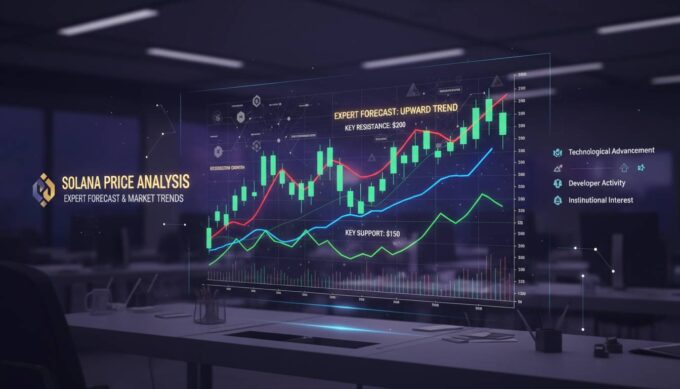
- $150-160 represents recent all-time highs from 2021 cycle
- $200-220 marks psychological barrier and previous cycle peak area
- $260+ represents all-time high territory with limited historical data
Moving Average Analysis
| Indicator | Current Position | Signal |
|---|---|---|
| 50-day MA | Above 200-day MA | Bullish momentum |
| 100-day MA | Rising trajectory | Positive trend |
| 200-day MA | Flat to rising | Long-term bullish |
The positioning of major moving averages provides insight into momentum and trend direction, though cryptocurrency markets are known for rapid trend reversals.
Risk Factors and Considerations
Comprehensive price analysis requires acknowledgment of associated risks. Investors considering Solana should carefully evaluate the following factors:
Market Volatility
Solana has historically exhibited higher volatility than major cryptocurrencies. Price swings of 10-20% within single days are not uncommon, requiring appropriate risk management and position sizing.
Network Reliability History
While the network has improved significantly, historical outages remain a consideration. The 2022 incidents, though addressed through technical upgrades, represent potential future risks that could impact price.
Regulatory Uncertainty
The cryptocurrency regulatory environment remains evolving and uncertain. Changes in classification, trading restrictions, or staking regulations could significantly impact Solana’s accessibility and valuation.
Competition
The blockchain landscape continues to evolve rapidly. Competing layer-1 networks and emerging layer-2 solutions present ongoing competitive pressures that could affect Solana’s market position.
Future Outlook and Conclusion
Solana’s price trajectory will likely depend on the interplay of multiple factors including network development progress, ecosystem growth, regulatory clarity, and broader market conditions. The fundamental improvements implemented since 2022, including enhanced validator infrastructure and increased decentralization, position the network favorably for continued adoption.
The potential approval of a Solana ETF represents a significant near-term catalyst that could drive substantial price appreciation. However, investors should maintain realistic expectations regarding volatility and consider dollar-cost averaging strategies to manage entry points effectively.
Looking further ahead, Solana’s success will depend on its ability to maintain technical advantages while expanding use cases and attracting institutional participation. The competitive blockchain landscape demands continued innovation, and Solana’s roadmap, including planned upgrades to further enhance throughput and reduce costs, suggests commitment to this pursuit.
For prospective investors, Solana presents both substantial opportunity and significant risk. Thorough due diligence, appropriate position sizing, and clear investment thesis development remain essential for navigating this dynamic asset class.
Frequently Asked Questions
What is Solana (SOL) and how does it work?
Solana is a high-performance blockchain network that uses a unique proof-of-history consensus mechanism combined with proof-of-stake to achieve transaction speeds of up to 65,000 transactions per second. Its native cryptocurrency, SOL, is used for transaction fees, staking, and as a store of value within the ecosystem. The network is designed to support decentralized applications, DeFi protocols, and NFT marketplaces with minimal costs and fast confirmation times.
Is Solana a good investment in 2024-2025?
Solana offers potential upside but carries significant risk, characteristic of all cryptocurrencies. The potential approval of a Solana ETF, continued ecosystem growth, and network upgrades represent bullish factors, while regulatory uncertainty and inherent market volatility present risks. Investors should conduct their own research, assess their risk tolerance, and consider portfolio diversification before investing in SOL or any cryptocurrency.
What is the Solana price prediction for the end of 2024?
Analyst predictions vary widely, with estimates ranging from $150 to $400+ depending on market conditions and catalyst realization. Consensus views place the price in the $200-300 range assuming continued ecosystem growth and absence of major negative developments. However, cryptocurrency markets remain highly unpredictable, and these predictions should not be viewed as guarantees.
What factors cause Solana price to go up or down?
Solana’s price responds to multiple factors including: network usage and adoption metrics, technical developments and upgrades, regulatory announcements and legal developments, broader cryptocurrency market sentiment, macroeconomic conditions, institutional investment flows (particularly ETF-related news), and competition from other blockchain networks. Positive developments typically drive appreciation while negative news often results in price declines.
Has Solana recovered from its 2022 crash?
Yes, Solana has substantially recovered from its 2022 lows. SOL fell to approximately $8-10 during the 2022 crypto market crash but subsequently recovered to levels exceeding $200 in 2024, representing gains of over 2,000%. This recovery reflects improved network stability, ecosystem growth, and renewed market confidence, though past performance does not guarantee future results.
Should I stake my Solana?
Staking SOL can provide annualized yields typically ranging from 5-8%, depending on validator selection and network conditions. Staking also contributes to network security and decentralization. However, staked tokens typically have a lock-up period during which they cannot be sold. Investors should research staking providers, understand the lock-up terms, and consider their liquidity needs before participating in staking.







Leave a comment