

Solana has emerged as one of the most dynamic blockchain platforms in the cryptocurrency ecosystem, consistently drawing attention from investors, developers, and market analysts alike. As a high-performance layer-1 blockchain known for its remarkable transaction speeds and low fees, Solana occupies a unique position in the competitive landscape of blockchain technology. Understanding the factors that influence Solana’s price movements requires examining multiple dimensions: technological fundamentals, adoption metrics, competitive dynamics, and broader market conditions.
This comprehensive analysis explores the various elements that shape Solana’s valuation, examines historical performance patterns, and discusses the range of perspectives from industry analysts regarding potential future trajectories. Whether you are a current holder, a prospective investor, or simply interested in understanding the cryptocurrency market, this piece provides the context needed to make informed decisions about digital asset investments.
Understanding Solana’s Market Position
Solana was launched in 2020 by Anatoly Yakovenko and his team at Solana Labs, introducing a novel proof-of-history consensus mechanism that fundamentally distinguishes it from other blockchain networks. This technical innovation enables the network to process tens of thousands of transactions per second, positioning Solana as a leading solution for applications requiring high throughput and minimal latency.
The cryptocurrency market operates with extreme volatility, and Solana is no exception to this reality. Price movements in digital assets can be influenced by a complex interplay of factors including macroeconomic conditions, regulatory developments, technological advancements, and shifts in investor sentiment. Historical performance, while informative, never guarantees future results, and this principle applies with particular force to the cryptocurrency sector.
Solana’s market position reflects both its technological capabilities and the broader market’s assessment of its growth potential. The network has secured partnerships across diverse sectors including decentralized finance, non-fungible tokens, gaming, and payments applications. This widespread adoption across use cases provides fundamental support for the token’s utility and long-term value proposition.
Historical Price Performance Analysis
Examining Solana’s price history reveals a pattern characterized by significant volatility alongside substantial growth periods. The token experienced a remarkable rally in 2021, reaching all-time highs as the broader cryptocurrency market experienced unprecedented expansion. This bull run was driven by increasing recognition of Solana’s technical advantages and growing institutional interest in the cryptocurrency sector.
The subsequent market correction in 2022 affected virtually all digital assets, with Solana experiencing its own significant drawdown alongside the broader market contraction. This period tested the resilience of the Solana ecosystem and led to meaningful developments in network infrastructure and operational stability. The ability to navigate challenging market conditions while maintaining technological development demonstrated the underlying strength of the platform.
More recent market dynamics have shown Solana’s capacity for recovery and growth. The cryptocurrency has demonstrated resilience during market stress periods while capturing renewed investor interest during bullish phases. Understanding this historical context provides essential perspective for evaluating potential future scenarios, though it is crucial to recognize that past performance does not determine future outcomes.
Technical Fundamentals and Network Growth
Solana’s technical architecture represents a compelling value proposition within the blockchain industry. The network’s ability to process transactions at speeds significantly exceeding traditional blockchain competitors creates meaningful utility for developers building performance-intensive applications. This technical advantage translates directly into user experience benefits and operational efficiency for applications deployed on the platform.
Network metrics provide important insights into platform adoption and utilization. Transaction volumes, active addresses, and total value locked within the ecosystem all serve as indicators of genuine utility and user engagement. Solana has maintained meaningful growth in these metrics despite market volatility, suggesting underlying demand for the platform’s unique technical capabilities.
The development ecosystem surrounding Solana continues to expand, with new projects launching regularly across various sectors including decentralized exchanges, lending protocols, NFT marketplaces, and gaming applications. This growing ecosystem creates network effects that strengthen Solana’s position within the competitive blockchain landscape, potentially supporting long-term value appreciation.
Developer activity represents another crucial indicator of platform health. The quantity and quality of developers building on Solana directly impact the network’s ability to deliver innovative applications and maintain competitive relevance. Current indicators suggest sustained developer interest and ongoing investment in the Solana ecosystem.
Competitive Landscape and Market Dynamics
The blockchain industry features intense competition among layer-1 and layer-2 solutions, each offering distinct value propositions and competing for user adoption. Solana faces competition from established platforms including Ethereum, Avalanche, Polygon, and numerous other blockchain networks, each pursuing different strategies for market penetration and growth.
Ethereum’s dominance in the smart contract platform sector creates both competitive pressure and validation for the broader ecosystem approach. Solana’s differentiation strategy centers on superior transaction throughput and cost efficiency, positioning the platform as the preferred choice for applications where these factors prove critical. The competitive dynamics between blockchain networks ultimately benefit users through continued innovation and feature development.
Market sentiment toward the cryptocurrency sector significantly influences price movements across individual assets. Broader adoption of digital assets by institutional investors, payment companies, and traditional financial institutions creates tailwinds for platforms like Solana demonstrating genuine utility. Regulatory developments, both domestically and internationally, continue to shape the operating environment for cryptocurrency businesses and influence investor confidence.
The emergence of new use cases and applications within the blockchain space provides additional catalysts for market growth. Areas including decentralized finance, NFT ecosystems, gaming, and real-world asset tokenization represent expanding markets where Solana’s technical advantages may drive increased adoption and network utilization.
Factors Influencing Price Movements
Multiple factors contribute to Solana’s price volatility and longer-term valuation trends. Understanding these influences provides context for evaluating potential future scenarios, though predicting specific price movements with precision remains fundamentally challenging given the inherent complexity of cryptocurrency markets.
Macroeconomic conditions significantly impact risk assets including cryptocurrencies. Interest rate policies, inflation expectations, and broader economic stability all influence investor appetite for volatile investments. Periods of monetary easing and low interest rates have historically coincided with strength in cryptocurrency markets, while tightening monetary conditions often create headwinds.
Regulatory developments represent another critical factor shaping cryptocurrency valuations. Clarity regarding regulatory frameworks, classification of digital assets, and approaches to consumer protection all impact market participant confidence. Positive regulatory developments can catalyze price appreciation, while uncertainty or restrictive policies may create downward pressure.
Network adoption metrics provide fundamental signals regarding platform value. Growing user bases, increasing transaction volumes, and expanding application ecosystems all support the fundamental thesis for Solana’s long-term value proposition. Conversely, declining adoption or significant technical challenges could undermine investor confidence and impact pricing.
Competitive developments within the blockchain industry influence relative valuations across platforms. Technological breakthroughs, new project launches, and shifts in developer preference all impact the competitive positioning of individual blockchain networks and their associated tokens.
Market liquidity and trading dynamics affect price movements on a day-to-day basis. Trading volumes, order book depth, and the presence of institutional market makers all influence price discovery and volatility characteristics. Understanding these dynamics provides context for interpreting price movements beyond fundamental factors.
Expert Perspectives and Market Analysis
Industry analysts approach cryptocurrency price prediction with varying methodologies and time horizons, resulting in a wide range of perspectives regarding potential future valuations. These perspectives reflect different assumptions about market conditions, adoption trajectories, and competitive dynamics.
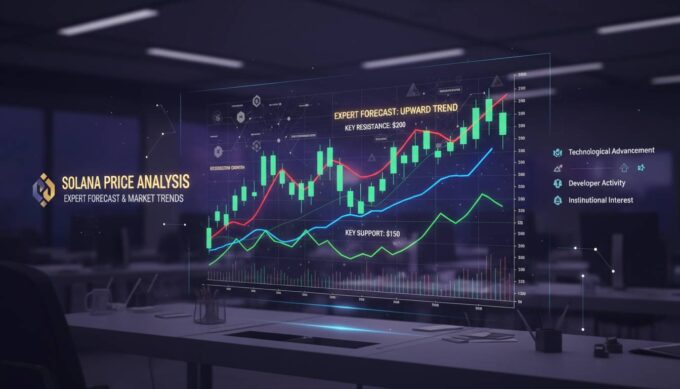
Technical analysis practitioners examine historical price patterns and trading indicators to identify potential support and resistance levels. Chart patterns, moving averages, and momentum indicators provide frameworks for understanding potential price trajectories based on historical relationships. While technical analysis offers structured approaches to market interpretation, it remains subject to limitations particularly in highly volatile cryptocurrency markets.
Fundamental analysis approaches focus on assessing intrinsic value through examination of network utilization, developer activity, partnership developments, and other indicators of platform health. These methodologies attempt to identify mispricings between current market valuations and underlying platform value, though quantifying blockchain network value remains inherently challenging given the novel and evolving nature of the asset class.
On-chain analysis provides additional perspectives through examination of blockchain data including wallet addresses, transaction patterns, and network activity. These analytical approaches offer insights into actual platform usage and holder behavior, providing fundamental context often overlooked in purely price-based analysis.
Investment Considerations and Risk Factors
Prospective investors considering Solana or any cryptocurrency investment should carefully evaluate their personal financial situation, risk tolerance, and investment objectives. The cryptocurrency market exhibits characteristics that may make it unsuitable for certain investors, including high volatility, potential for total loss of investment, and limited regulatory protection.
Diversification principles apply particularly strongly to cryptocurrency investments given their speculative nature and volatility characteristics. Maintaining appropriate exposure relative to overall portfolio allocation ensures that cryptocurrency investments do not create disproportionate risk exposure. Consultation with qualified financial advisors provides valuable perspective for integrating cryptocurrency investments within broader financial planning frameworks.
Technical and operational risks require consideration when evaluating blockchain investments. Network outages, security vulnerabilities, and technological obsolescence all represent potential threats to platform value. Solana has experienced network incidents in the past, and ongoing development efforts focus on addressing reliability concerns and enhancing platform stability.
Regulatory risk represents an ongoing consideration for cryptocurrency investors. Changes in regulatory treatment of digital assets could significantly impact market access, taxation treatment, and overall market participation. Staying informed regarding regulatory developments provides essential context for investment decision-making.
Long-Term Outlook and Growth Potential
The long-term outlook for Solana reflects both the platform’s technical capabilities and broader trends within the blockchain industry. Growing adoption of blockchain technology across industries creates structural tailwinds for platforms demonstrating genuine utility and technical differentiation.
The continued evolution of decentralized applications and Web3 technologies provides a substantial addressable market for blockchain platforms capable of supporting sophisticated applications. Solana’s high-throughput architecture positions it well to capture demand from applications requiring the transaction capacity and cost efficiency that the platform provides.
Institutional adoption of cryptocurrency assets continues to develop, with major financial institutions increasingly offering cryptocurrency services to their clients. This trend creates new sources of demand and market legitimacy while potentially reducing volatility through increased market participation from sophisticated investors.
The competitive dynamics within the blockchain industry will continue to evolve, with technological innovation and adoption likely determining long-term market leaders. Solana’s ongoing development roadmap and community support provide foundations for continued competition within the industry, though success cannot be guaranteed given the rapid pace of technological change.
Frequently Asked Questions
What factors have the biggest impact on Solana’s price?
Solana’s price responds to multiple factors including overall cryptocurrency market sentiment, network adoption and usage metrics, competitive developments within the blockchain industry, macroeconomic conditions, and regulatory news. Given Solana’s relatively smaller market capitalization compared to Bitcoin and Ethereum, individual developments can sometimes create more pronounced price movements.
Is Solana a good investment for beginners?
Solana, like all cryptocurrencies, carries significant risk and volatility that may not be suitable for all investors. Beginners should thoroughly research cryptocurrency investments, understand the risks involved, and only invest amounts they can afford to lose. Consulting with qualified financial advisors before making investment decisions is recommended.
How does Solana compare to Ethereum?
Solana and Ethereum serve similar functions as smart contract platforms but employ different technical approaches. Solana offers higher transaction throughput and lower fees, while Ethereum benefits from greater network effects, developer adoption, and brand recognition. The two platforms compete for similar use cases while serving different segments of the market.
What is the minimum investment amount for Solana?
Solana can be purchased in fractional amounts, allowing investors to buy any amount they choose within their budget constraints. Most cryptocurrency exchanges permit purchases of dollar amounts rather than requiring whole token purchases, making the investment accessible at various price points.
How do I store Solana safely?
Solana can be stored in various wallet options including hardware wallets for maximum security, software wallets for convenience, and exchange wallets for active trading. Hardware wallets generally provide the strongest security for long-term holders, while the choice depends on individual security preferences and trading needs.
Can Solana’s price go to zero?
While any cryptocurrency can theoretically decline to near-zero values, Solana’s established network, developer community, and real-world utility provide fundamental support that distinguishes it from purely speculative assets. However, investors should recognize that the cryptocurrency market remains highly speculative, and past performance does not guarantee future results.
Conclusion
Solana represents a compelling blockchain platform with genuine technical differentiation and growing ecosystem adoption. The network’s high-performance architecture addresses real needs within the blockchain industry, positioning it favorably within the competitive landscape. However, prospective investors must approach cryptocurrency investments with appropriate caution given the inherent volatility and speculative nature of the asset class.
The factors influencing Solana’s price reflect the complex interplay between platform-specific developments, competitive dynamics, regulatory environments, and broader market conditions. While technical fundamentals and adoption metrics provide foundations for potential long-term value appreciation, predicting specific price movements with precision remains fundamentally challenging.
For those considering Solana investments, thorough research, appropriate position sizing, and clear understanding of personal risk tolerance serve as essential guiding principles. The cryptocurrency market offers potential opportunities alongside significant risks, and informed decision-making represents the foundation for sustainable participation in this evolving asset class.





Leave a comment