

The cryptocurrency market continues to evolve rapidly in 2024-2025, with Bitcoin hovering around significant price milestones and institutional adoption accelerating across the United States. For investors asking “which crypto to buy now,” the answer requires careful analysis of market fundamentals, utility, adoption trends, and personal risk tolerance—rather than chasing short-term gains.
This guide provides a comprehensive framework for evaluating cryptocurrency investments, examines leading options in the market, and outlines critical factors every US investor should consider before committing capital.
📊 MARKET OVERVIEW
• Bitcoin (BTC) maintains the largest market capitalization at approximately $1.8 trillion (CoinGecko, January 2025)
• Total cryptocurrency market cap exceeds $3.5 trillion globally
• Over 14,000 cryptocurrencies trade on various exchanges worldwide
• US regulatory frameworks continue developing through SEC and CFTC guidance
Key Takeaways
• Diversification matters: Holding multiple cryptocurrencies reduces single-asset risk
• Utility drives value: Projects with real-world use cases show stronger long-term fundamentals
• Regulatory awareness: US investors must understand tax implications and exchange compliance
• Volatility is inherent: Crypto prices can swing 20-50% in weeks—only invest what you can afford to lose
• Research is essential: Understanding technology, team, and tokenomics before investing
The cryptocurrency market offers substantial opportunities but requires educated decision-making. This article equips you with the analytical framework to identify potential investments while managing risk appropriately.
Understanding the Cryptocurrency Market
What Determines Cryptocurrency Value
Cryptocurrency values derive from multiple interconnected factors that experienced investors analyze before making allocation decisions. Understanding these fundamentals helps separate promising projects from speculative hype.
Supply and Demand Dynamics
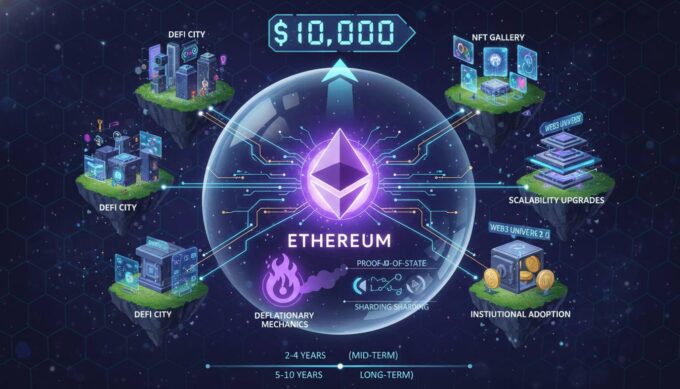
Every cryptocurrency operates under different supply models that significantly impact price potential. Bitcoin maintains a capped supply of 21 million coins, creating inherent scarcity as adoption increases. Ethereum’s supply became deflationary after the 2022 merge upgrade, burning more ETH in transaction fees than is created in block rewards. Many altcoins maintain higher supply totals, which affects per-coin pricing psychology even when market caps appear comparable.
Adoption and Network Effects
The value of any cryptocurrency strengthens when more users and institutions adopt it. Bitcoin’s institutional adoption through ETFs, corporate treasury holdings, and payment processors has cemented its position as “digital gold.” Ethereum’s developer ecosystem and decentralized finance (DeFi) applications create sustained demand for ETH as gas fees power network operations.
Technology and Utility
Cryptocurrencies serving practical purposes often demonstrate more sustainable value than those lacking functional use cases. Smart contract platforms enable decentralized applications, while payment-focused coins facilitate transactions. Evaluating whether a project solves real problems helps identify potential long-term winners versus short-lived trends.
Market Cycles and Timing
Cryptocurrency markets historically move through distinct cycles of bull and bear periods. Understanding these patterns helps investors avoid buying at peaks and potentially accumulating during downturns.
The 2020-2021 bull market saw Bitcoin reach $69,000 before the 2022 bear market wiped approximately 75% from peak values. The 2023-2024 recovery pushed Bitcoin to new all-time highs above $100,000 in late 2024, driven partly by spot ETF approvals and institutional inflow. These cycles demonstrate that patience and discipline often outperform timing attempts.
💡 FUNDAMENTAL METRIC: Bitcoin’s stock-to-flow ratio models predict long-term scarcity impact, though these projections remain controversial among economists.
Top Cryptocurrencies by Market Position
The following analysis examines major cryptocurrencies by market capitalization and utility, providing educational context for informed decision-making rather than specific buy recommendations.
Bitcoin (BTC): The Store of Value
Bitcoin remains the dominant cryptocurrency by market cap and serves primarily as a digital store of value. Its 15-year track record, institutional adoption, and recognized brand position it as the entry point for most new crypto investors.
Strengths:
• Largest market cap and liquidity
• Spot ETF approval in US markets (2024)
• Corporate treasury adoption increasing
• Most widely accepted cryptocurrency
• Regulated exchanges readily available
Considerations:
• Higher absolute cost per coin ($100,000+)
• Slower transaction times compared to newer chains
• Energy-intensive consensus mechanism
• Limited smart contract functionality
Ethereum (ETH): The Smart Contract Platform
Ethereum hosts the largest ecosystem of decentralized applications, making ETH essential infrastructure for the broader crypto economy. The transition to proof-of-stake reduced energy consumption by approximately 99.95%.
Strengths:
• Dominant smart contract platform
• Extensive DeFi and NFT ecosystem
• Institutional staking adoption
• Active development community
• Layer-2 scaling solutions improving throughput
Considerations:
• Gas fees can be expensive during network congestion
• Competition from faster, cheaper Layer-1 chains
• Regulatory uncertainty around token classifications
• Technical complexity for average users
Solana (SOL): High-Performance Blockchain
Solana has emerged as a leading alternative to Ethereum, offering faster transaction speeds and lower fees through its unique proof-of-history mechanism.
Strengths:
• High transaction throughput (65,000 TPS theoretical)
• Significantly lower fees than Ethereum
• Growing DeFi and NFT ecosystem
• Strong developer adoption
• Mobile-focused blockchain initiatives
Considerations:
• Historical network stability concerns
• Centralization debates around validator requirements
• Smaller ecosystem than Ethereum
• More volatile price action
Other Notable Projects
Cardano (ADA): Research-focused blockchain with academic rigor, slower development pace but strong peer-reviewed approach
Ripple (XRP): Focus on cross-border payments with significant banking partnerships, ongoing SEC litigation creates uncertainty
Dogecoin (DOGE): Originally a meme coin, now accepted by major companies including Tesla and SpaceX for payments
Comparing Cryptocurrency Investment Approaches
| Factor | Bitcoin | Ethereum | Solana | Altcoins |
|---|---|---|---|---|
| Market Cap Rank | #1 | #2 | #3-5 | Various |
| Primary Use | Store of value | Smart contracts | High-speed apps | Various |
| Volatility | Moderate | Moderate-High | High | Very High |
| Liquidity | Excellent | Excellent | Good | Variable |
| Development | 15+ years | 10+ years | 5+ years | Variable |
Investment Strategies by Goal
Long-Term Hold (HODL): Bitcoin and Ethereum suit investors seeking established assets with proven track records. These cryptocurrencies experience less dramatic speculation than smaller projects and benefit from institutional infrastructure.
Growth-Oriented: Solana and other Layer-1 blockchains offer higher growth potential but come with increased risk. These investments require monitoring ecosystem development, competitor positioning, and technical milestones.
Diversification: Many investors allocate across multiple cryptocurrencies, balancing established assets with higher-risk growth opportunities. A common approach maintains 60-70% in Bitcoin and Ethereum, with 30-40% in alternative projects.
How to Purchase Cryptocurrency in the US
Selecting a Regulated Exchange
US investors should use exchanges registered with FinCEN and compliant with state regulations. Major options include:
Coinbase: Largest US exchange, user-friendly interface, available in all 50 states
Kraken: Strong security reputation, wide coin selection, advanced trading features
Binance US: Lower fees than competitors, limited coin availability due to US restrictions
Gemini: New York-chartered trust company, strong regulatory compliance focus
Account Setup Process
1. Account Creation: Provide identification (driver’s license or passport), Social Security Number, and personal information for compliance requirements.
2. Verification: Complete identity verification, which typically takes minutes to hours depending on backlog.
3. Funding: Link bank account (ACH transfer, slower but lower fees) or debit card (instant but higher fees).
4. Purchasing: Navigate to desired cryptocurrency, enter purchase amount, and confirm transaction.
Storage Considerations
Hot Wallets: Software wallets connected to internet for convenient trading but more vulnerable to hacks. Exchange wallets fall into this category.
Cold Storage: Hardware wallets (Ledger, Trezor) store private keys offline, providing superior security for long-term holdings. Most experienced investors transition significant holdings to cold storage.
Risk Factors Every Investor Should Know
Market Volatility
Cryptocurrency markets experience extreme volatility that catches many investors unprepared. Bitcoin dropping 50% within months has occurred multiple times in its history. Investors should only allocate capital they can afford to lose entirely.
Risk Mitigation: Never invest more than 10-15% of your total portfolio in cryptocurrency. Maintain emergency funds in traditional assets before considering crypto allocation.
Regulatory Uncertainty
US cryptocurrency regulation remains developing, with potential for significant policy changes affecting specific tokens, exchanges, or the entire asset class. The SEC has pursued enforcement actions against numerous projects, creating uncertainty around token classifications.
Risk Mitigation: Research which cryptocurrencies might face regulatory challenges. Avoid projects with unclear legal status or aggressive marketing.
Technical Risks
Smart contract bugs, network hacks, and exchange failures have resulted in billions in losses across crypto history. While security has improved, no investment is immune to technical failure.
Risk Mitigation: Use hardware wallets for significant holdings. Research project audits and security track records. Diversify across multiple assets.
Scams and Fraud
The crypto space attracts numerous scams including rug pulls (developers abandoning projects after raising funds), Ponzi schemes, and phishing attacks. US investors lost over $4 billion to cryptocurrency fraud in 2023 alone (FBI IC3 Report).
Risk Mitigation: Research thoroughly before any investment. Verify team identities, check code audits, and be skeptical of guaranteed returns or pressure tactics.
Common Investment Mistakes to Avoid
| Mistake | Impact | Solution |
|---|---|---|
| FOMO buying | Buying at peaks | Stick to predetermined investment amounts |
| Ignoring research | Falling for scams | Verify all claims independently |
| No exit strategy | Holding through crashes | Set profit targets and stop losses |
| Over-concentration | Amplified losses | Maintain diversified portfolio |
| Ignoring taxes | Legal complications | Track all transactions meticulously |
⚠️ CRITICAL WARNING: Never invest money you cannot afford to lose. Cryptocurrency is highly speculative, and many investors lose significant portions of their investment. No legitimate source can guarantee specific returns or predict price movements.
Prevention Strategies:
• Research projects for weeks, not minutes
• Start with small positions you can afford to lose completely
• Never share private keys or seed phrases with anyone
• Use two-factor authentication on all exchange accounts
• Question any investment opportunity requiring upfront payment
Expert Perspectives on Crypto Investing
The cryptocurrency investment landscape benefits from diverse viewpoints across traditional finance and crypto-native communities. Here are established frameworks from recognized voices:
Institutional Perspective: Major financial institutions increasingly recommend modest cryptocurrency allocations (1-5% of portfolios) for diversification benefits. BlackRock’s spot Bitcoin ETF launch in 2024 signaled institutional acceptance, though most recommend cautious positioning.
Risk-Aware Approach: Financial advisors generally suggest treating cryptocurrency as a high-risk allocation within diversified portfolios rather than a core holding. The lack of intrinsic value (unlike dividends or interest) makes traditional valuation difficult.
Technical Analysis: Chart-based investors examine price patterns, moving averages, and volume data to inform entry points. However, fundamental analysis of utility and adoption often proves more reliable for long-term positions.
📊 BENCHMARK ALLOCATIONS
| Investor Profile | Suggested Crypto Allocation |
|—————–|—————————|
| Conservative | 1-3% |
| Moderate | 3-5% |
| Aggressive | 5-15% |
| Speculative | 15-25% |
Essential Tools and Resources
| Tool | Purpose | Cost |
|---|---|---|
| CoinGecko/CoinMarketCap | Price tracking | Free |
| Blockfolio/Delta | Portfolio management | Free |
| Etherscan/Blockchain explorers | Transaction verification | Free |
| Ledger/Trezor | Cold storage | $50-250 |
| Coinbase/Binance US | Exchange platforms | Variable fees |
Recommended Research Resources:
• CoinDesk and CoinTelegraph for news coverage
• Messari for institutional-grade research
• The Defiant for DeFi-specific analysis
• CryptoTwitter for community sentiment (with skepticism)
Frequently Asked Questions
Is cryptocurrency a good investment for beginners?
Cryptocurrency can be appropriate for beginners who approach it with proper education and risk management. Start with Bitcoin or Ethereum, use reputable exchanges, and invest only amounts you’re prepared to lose entirely. Research thoroughly before allocating capital.
How much should I invest in cryptocurrency?
Most financial advisors recommend allocating 1-10% of your total investment portfolio to cryptocurrency, depending on your risk tolerance. Never invest money needed for essential expenses, emergency funds, or short-term goals.
Which cryptocurrency has the best future potential?
No cryptocurrency’s future performance can be guaranteed. Bitcoin and Ethereum have established track records and institutional adoption. Smaller cryptocurrencies may offer higher growth potential but carry greater risk. Research utility, adoption, and team credibility rather than seeking predictions.
Is it legal to buy cryptocurrency in the United States?
Yes, purchasing cryptocurrency is legal in the United States. However, investors must report transactions for tax purposes and use exchanges compliant with US regulations. State regulations vary slightly, and some activities like certain DeFi protocols may exist in regulatory gray areas.
How do I know if a cryptocurrency is legitimate?
Legitimate cryptocurrencies typically have verifiable teams, transparent code repositories, independent security audits, established communities, and real utility. Be wary of projects promising guaranteed returns, lacking public team information, or with vague whitepapers. Extensive due diligence is essential before any investment.
What happens if I lose access to my crypto wallet?
If you lose your private keys or seed phrase, your cryptocurrency becomes permanently inaccessible. There is no customer service to recover lost keys. This is why proper storage, backups, and security practices are critical. Consider using reputable hardware wallets with proper backup procedures.
Conclusion
The question of “which crypto to buy now” doesn’t have a simple answer because cryptocurrency investment requires individualized analysis based on personal risk tolerance, financial goals, and research capability.
Key principles for successful cryptocurrency investing:
Bitcoin and Ethereum remain the foundational assets for most portfolios, offering established networks, institutional infrastructure, and proven track records. These cryptocurrencies suit investors seeking exposure with moderate risk profiles.
Alternative cryptocurrencies like Solana offer higher growth potential but require greater research sophistication and risk tolerance. The rapidly evolving competitive landscape means that specific project recommendations change frequently.
Regardless of which cryptocurrencies interest you, essential practices include: thorough research before any investment, diversified portfolio allocation, secure storage practices, tax compliance awareness, and emotional discipline during market volatility.
The cryptocurrency market will continue maturing, with regulatory clarity improving and institutional adoption expanding. US investors who approach this asset class with education, patience, and risk awareness position themselves to participate in potential growth while managing inherent volatility appropriately.
Start with small positions, learn continuously, and never invest more than you can afford to lose.









Leave a comment